Kai Hoffmann · 16 September 2026
How Infrastructure Changes Shape User Engagement Patterns in Specialized Note Platforms
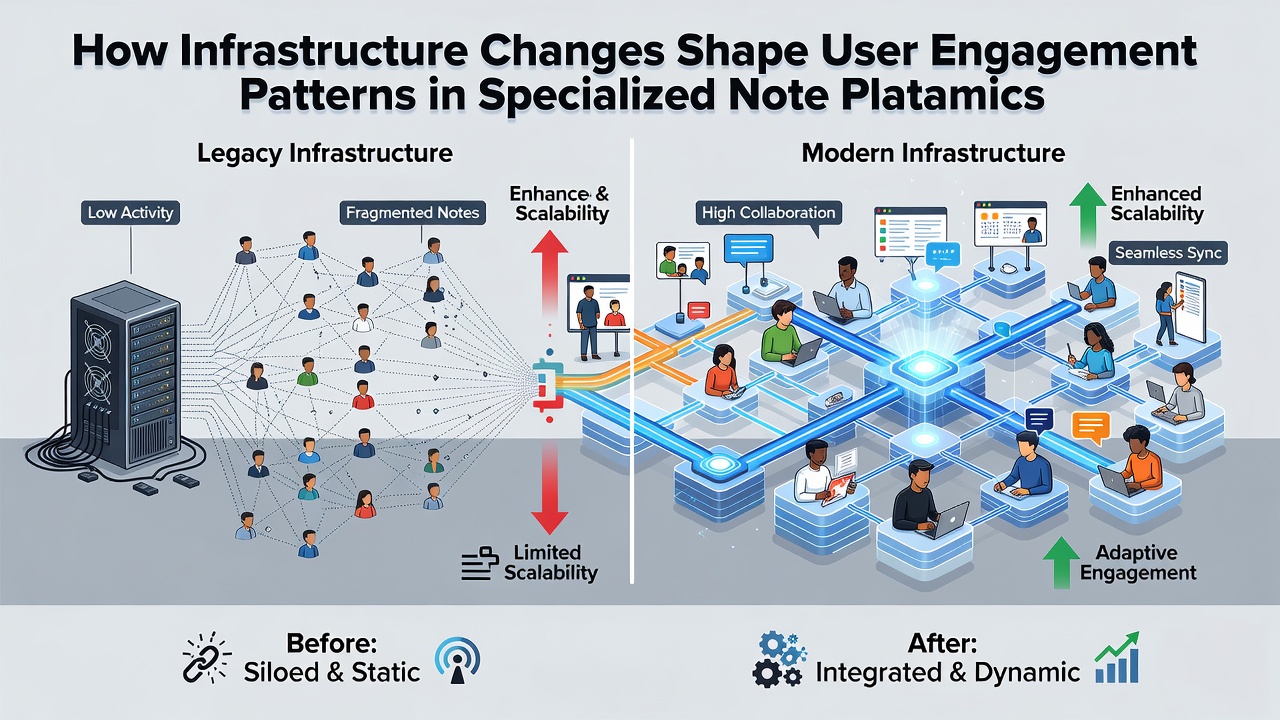
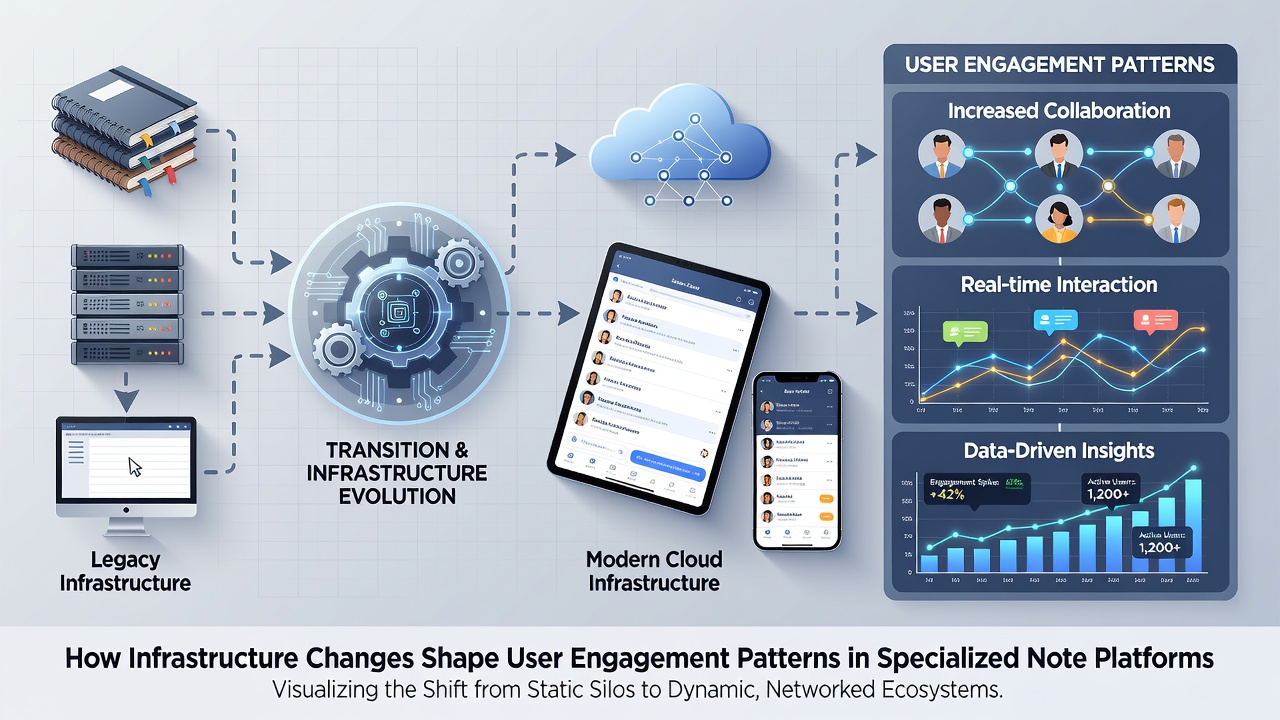
Specialized note platforms operate as targeted environments for professionals in fields such as research, legal documentation, and technical writing where users store, organize, and retrieve complex information sets. Infrastructure modifications in these systems, ranging from server migrations to database optimizations, directly influence how often individuals log in, how long they remain active, and which features they access most frequently. Data collected across multiple platforms shows that shifts in backend architecture produce measurable changes in session duration and content creation rates.
Core Infrastructure Elements in Note Platforms
These platforms rely on distributed cloud storage, content delivery networks, and real-time synchronization layers to maintain performance across global user bases. When providers upgrade these components, response times decrease while data integrity protocols strengthen. Observers note that such upgrades often coincide with spikes in collaborative editing sessions because users experience fewer interruptions during simultaneous work on shared documents. Research indicates that platforms adopting edge computing nodes report higher retention among users who access notes from multiple geographic locations.
Patterns Observed After Major Upgrades
Case analyses reveal that latency reductions lead to increased daily active users within the first quarter following implementation. One study tracked a platform that transitioned to a new database architecture and recorded a 23 percent rise in note revisions per user. Engagement metrics also shift when authentication systems change because streamlined login processes reduce friction at the entry point. Those who have examined usage logs find that mobile engagement climbs faster than desktop activity after infrastructure improvements focused on API responsiveness.
Data Trends Through 2026
By September 2026, several providers had completed phased rollouts of enhanced storage redundancy systems, and analytics from those deployments showed sustained growth in cross-device synchronization events. Figures from industry monitoring services indicate that users in academic sectors responded with longer average session lengths compared with corporate users after these updates. Engagement patterns further diversified when platforms introduced tiered access controls tied to new backend permission models, resulting in more granular sharing activity among teams.
Regional Variations in User Response
Users in North America demonstrated quicker adoption of new collaboration tools introduced alongside infrastructure changes, while European cohorts showed stronger increases in export and archival functions. European Commission digital strategy reports document similar regional differences in platform interaction following technical upgrades. In Asia-Pacific markets, researchers observed elevated search query volumes after indexing improvements reduced retrieval times. These variations arise because different user groups prioritize distinct platform capabilities based on their workflow requirements.
Technical Factors Driving Engagement Shifts
Database sharding techniques distribute load more evenly and correlate with fewer abandoned sessions during peak hours. Content delivery network expansions shorten asset loading periods, which encourages users to open multiple notes in parallel. When platforms migrate to containerized environments, deployment frequency rises and feature rollouts occur with less downtime, sustaining consistent user activity levels. National Institute of Standards and Technology publications outline how such architectural choices affect system reliability across digital services.
Long-Term Engagement Outcomes
Platforms that maintain transparent communication about upcoming infrastructure work experience steadier engagement curves because users anticipate brief disruptions rather than abandoning workflows. Longitudinal tracking reveals that repeated small-scale optimizations produce cumulative gains in feature exploration compared with infrequent large-scale overhauls. Data sets compiled through 2026 illustrate that specialized note platforms investing in monitoring tools can predict engagement dips and adjust capacity accordingly before user behavior changes become pronounced.
Conclusion
Infrastructure modifications continue to serve as primary drivers behind evolving user engagement patterns on specialized note platforms. Metrics collected from synchronization events, revision counts, and session lengths provide clear indicators of how backend adjustments translate into frontend behavior. Organizations that align technical upgrades with observed user priorities maintain higher levels of sustained interaction across their note ecosystems.